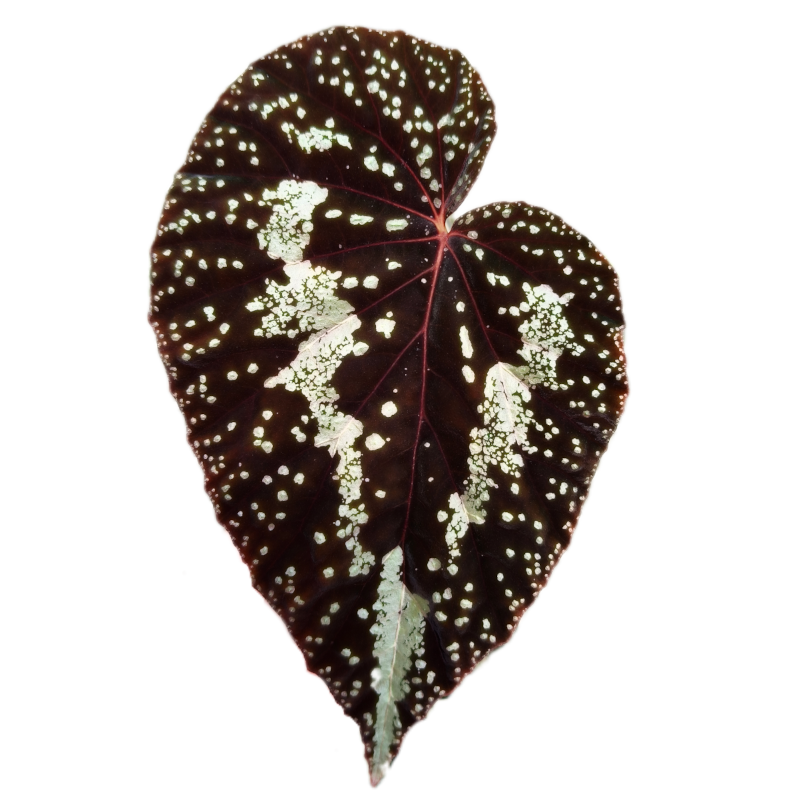

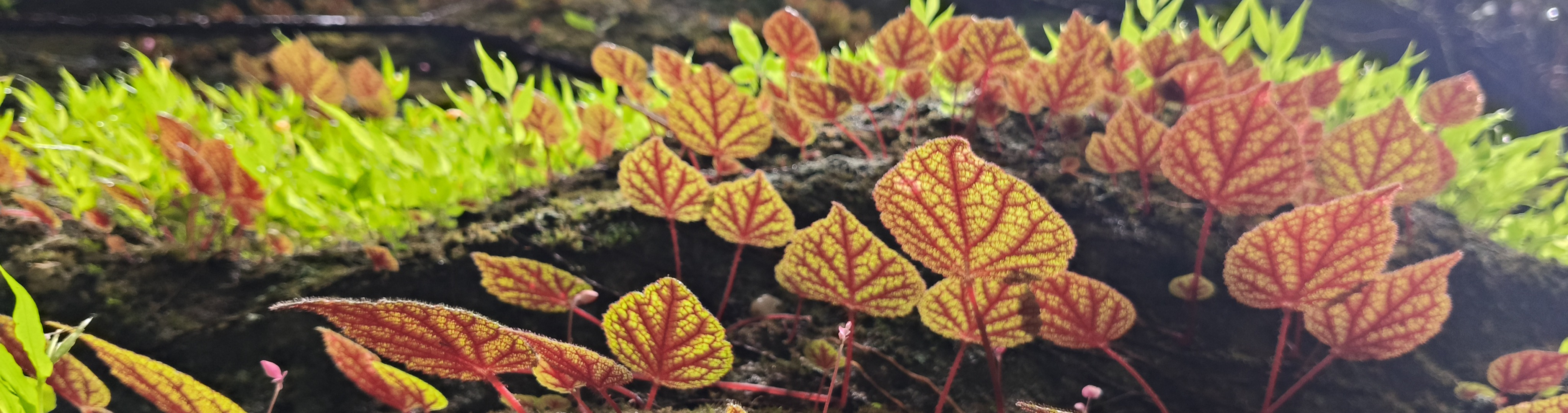
B. boiviniana
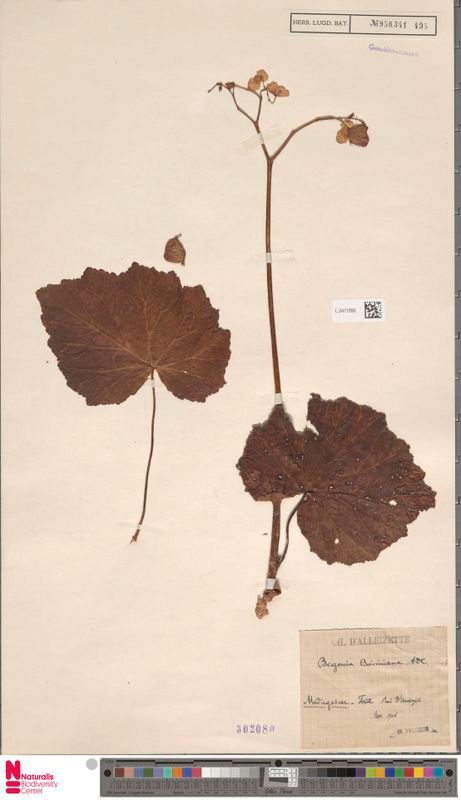
Plant acaule, has underground rhizome. Leaf petiole 4-6 cm long, with shaggy, fine hair, dense in young condition (hair 4-5 mm long), becoming glabrescent; blade ovate, slightly oblique, 7-9-palmatinerve at base, pointed at tip, cordate at base, 8 X 8 to 20 X 20 cm; upper surface finely punctuated with spike-like hairs, lower surface with 5 mm long hairs, located on the veins; edges finely dentate; teeth terminated by a spike hair; ribs finely marked below. Ovate-lanceolate, leafs glabrous, slightly serrated or deciduous at the level of the stump. Inflorescence 1-2 foot, in bipartate cyme, common axis 10-20 (-35) cm long, glabrous, first branches 2.5 cm, others shorter; obovate bracts, rapidly deciduous; fine pedicel. MALE flower has 2 suborbicular tepals 6 x 6 mm, strings at base. Stamens 10-20, fasciculate, with oblong anthers, 2.5 mm long; very short thread barely 0.5 mm. FEMALE flowers seen only in the very young state, has 4 tepals, the smaller internals. Capsule triailee, leaning; large triangular wing, 12 mm wide, small 5 mm wide, glabrous. Seeds small, with tegument reticule. - Pl. 14, p. 49. Imperfectly known species, possibly possibly only a pubescent variety of B. nossibea.
Pests Diseases
- Classification: Species
- Plant Type: Rhizomatous
- Botanical Section: Quadrilobaria
- Origin: Africa, Madagascar
- Originator: A.DC.
- Date of Origin: 1859
Begonia Community Hub
Share a Growing Update
Loading community updates...