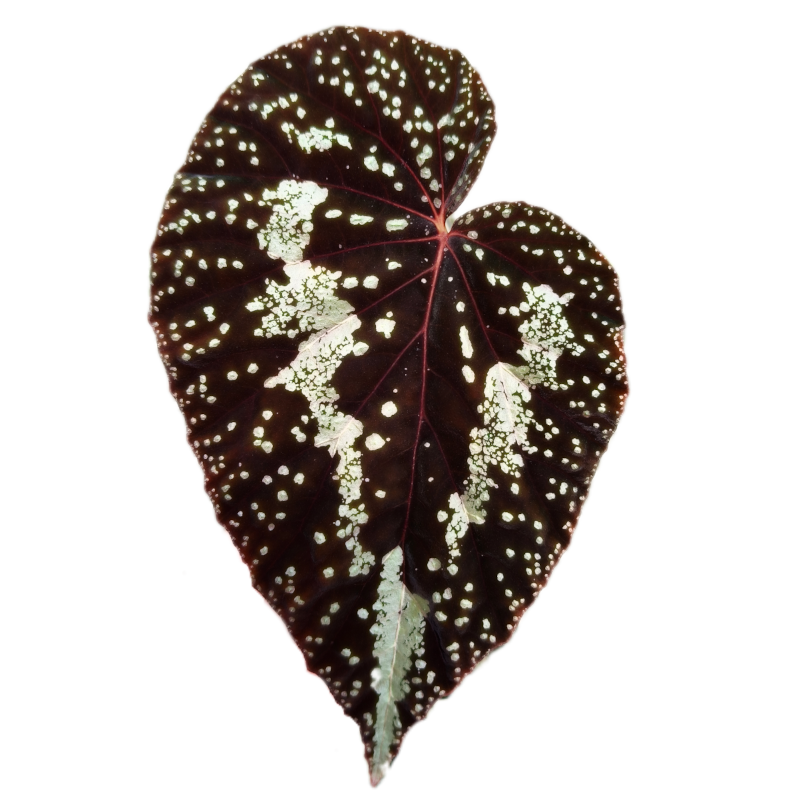

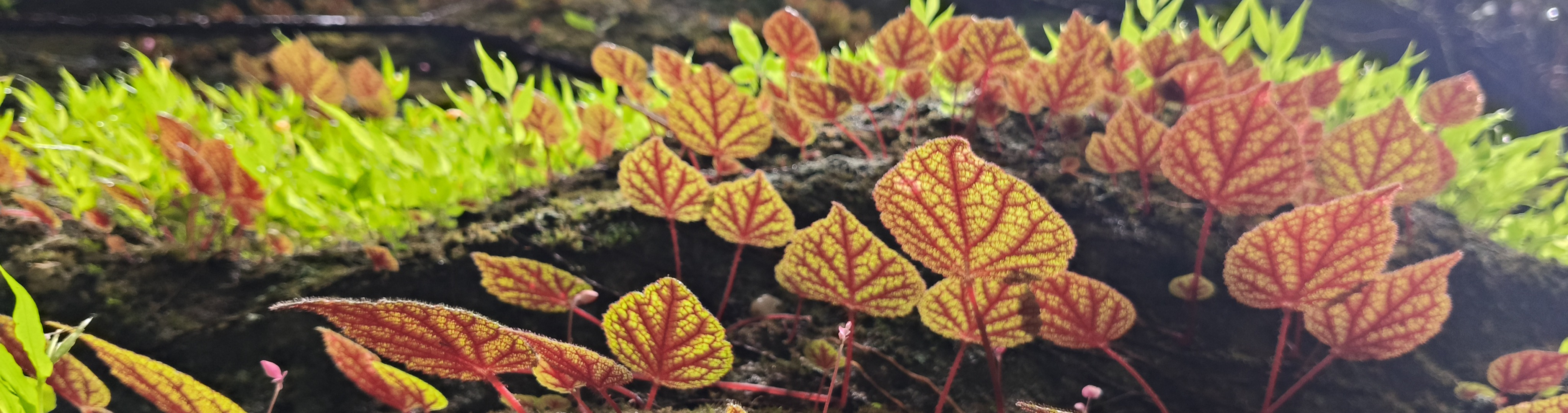
B. nana
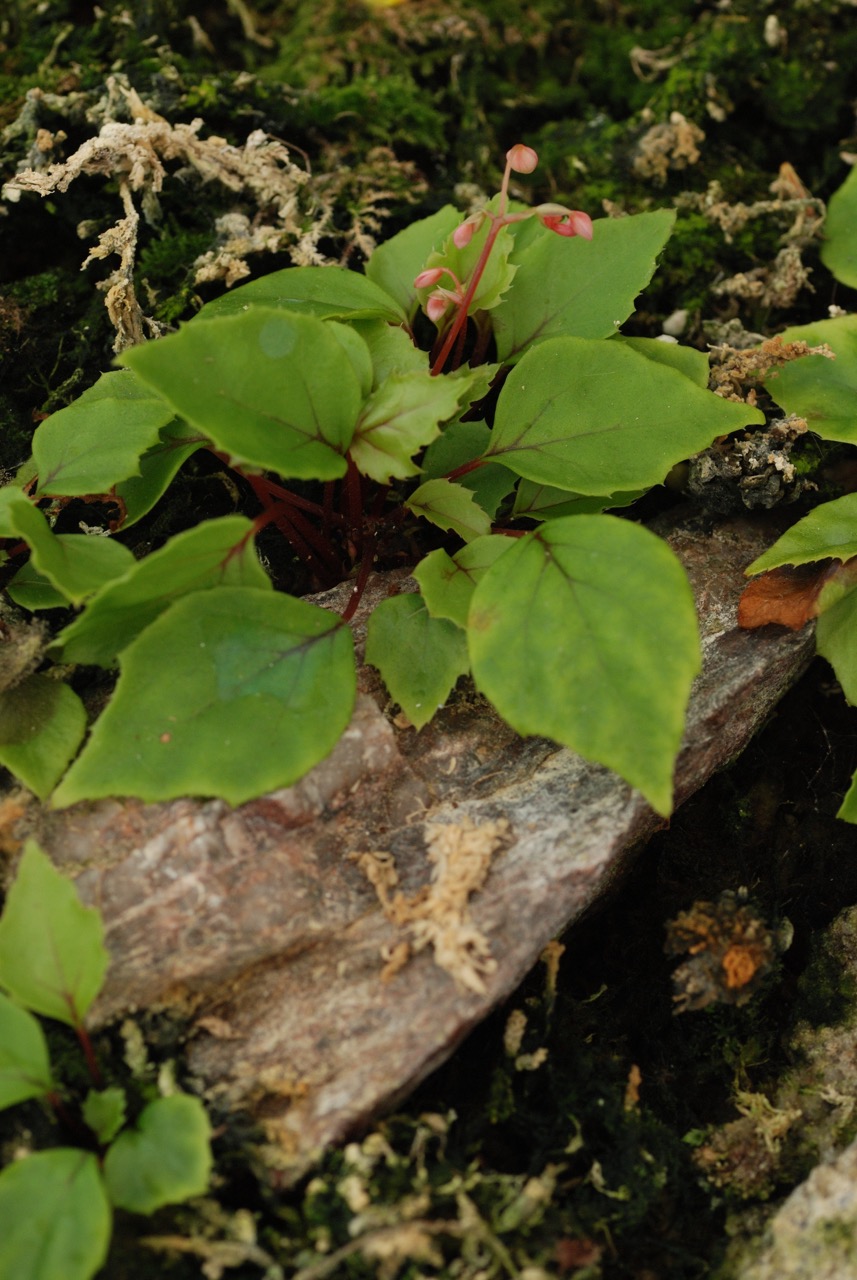
Plant small, acaule, not exceeding 10-12 cm in height, entirely glabrous, tuberous small, applies against the rocks; roots up to 10 cm long. Leaves 2 to 6 small, with red petiole, small, 2.5-6 cm long; limbus pinnatinerve, somewhat crassulose, 2-10 x 0.9-2 cm, lanceolate-oval, ± acuminum long at the apex, acute and very attenuated on the petiole or sometimes rope at the base, light green and brilliant above, green paler sometimes almost whitish below; reddish edges and dente; 3-6 teeth ± well developed on each side; rib median red; 2-3 lateral ribs all marked upper, finely projecting on the lower side. Stipules basilaria lanceolate acute, fine, 2 mm long. Cymes 1-3, pauciflores, bisexuals; 2-4 pink to bright pink flowers at the top of a crumbling, red stalk 3.5-10 cm long. Bractee lanceolate, 2 mm long; pedicel grele, 10 mm long. MALE flowers has 4 oblong tepals, 4-6 x 3-4 mm, the two outer larger and bright pink, the two internal smaller and pale pink. Stamens 9-12; nets are united at the base in a column 1-1.5 mm long, the free part of the nets is ± Jongue (the anthers appear then inserted at one side of the column, one above the other; nets are of the same length, the staminal mass forms a regular bouquet, if the lengths are different, the staminal mass is removed); yellow anther, oblong 0.7-1.2 mm long. FEMALE flower has 5-6 tepals lanceolate, of slightly unequal size, larger external and bright pink, smaller internals and pale pink, 4-6 x 1.5-2 mm. Ovary elliptic, 2-4 mm long, triaile, a large subtriangular wing 5 mm wide, the other 2 scarcely marked, very narrow; styles 3, 2-3 mm long, free; yellow stigma, papillose crescent. Capsule 7-8 x 10 mm (including wing), elliptical; large oblong wing, 6-8 mm wide, the other 2 slightly developed, forming only a relief dimension. Many seeds. - Pl. 5 p. 25. By its particular habit, this species recalls certain African species of B. squamulosa Hook group. f., or even American (B. herbacea Vell., B. attenuate A.DC.), but the structure of androcee and that of the FEMALE flower are different, as well as the bractees and stipules.
Pests Diseases
- Classification: Species
- Plant Type: Tuberous
- Botanical Section: Erminea
- Origin: Africa, Madagascar
- Originator: l'Héritier, Stirp. Nov.
- Date of Origin: 1788
Begonia Community Hub
Share a Growing Update
Loading community updates...