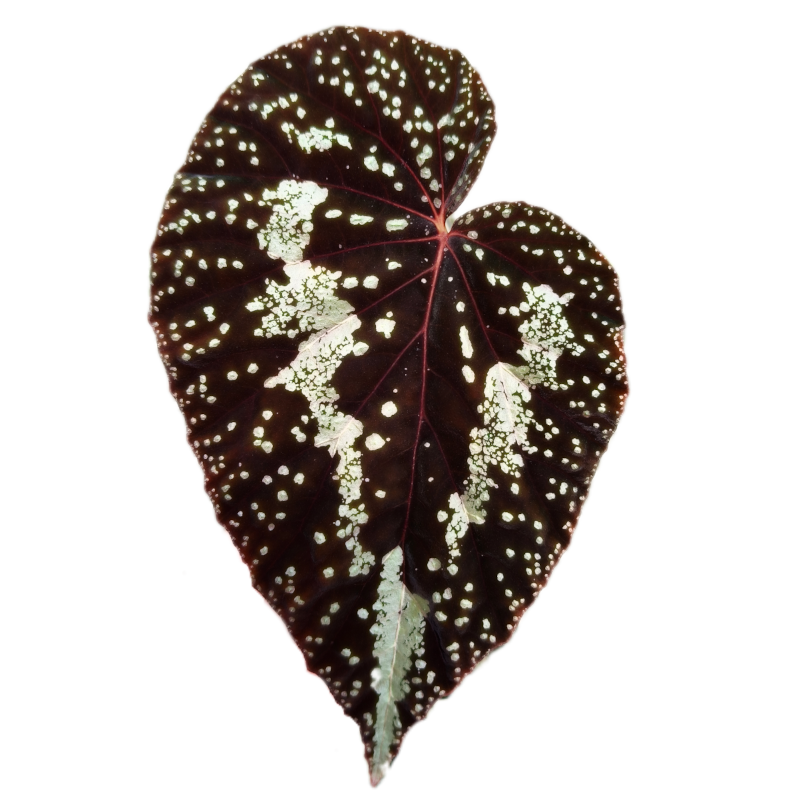

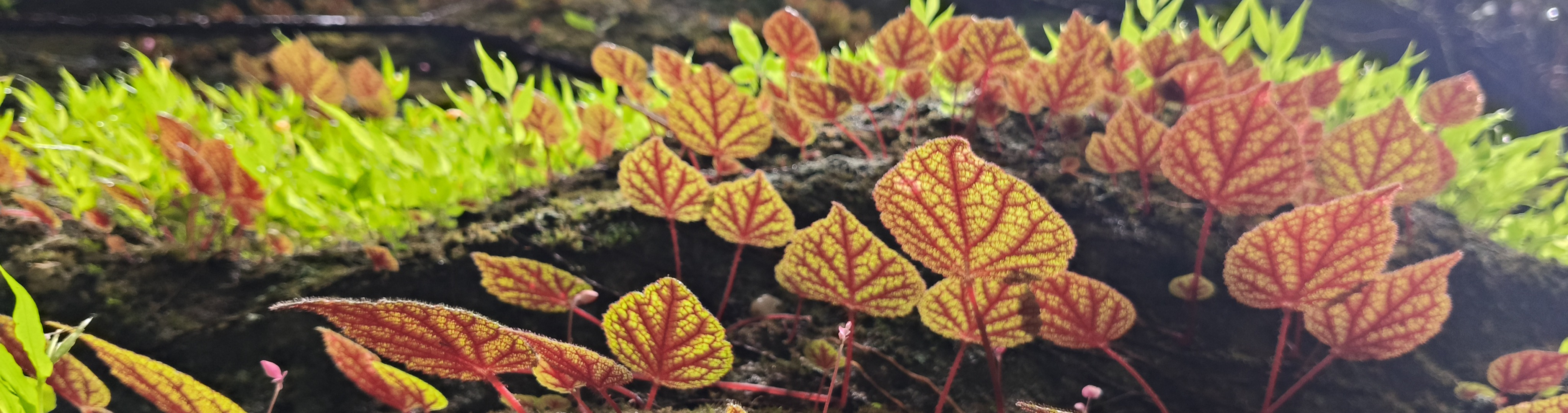
B. angularis var. angularis
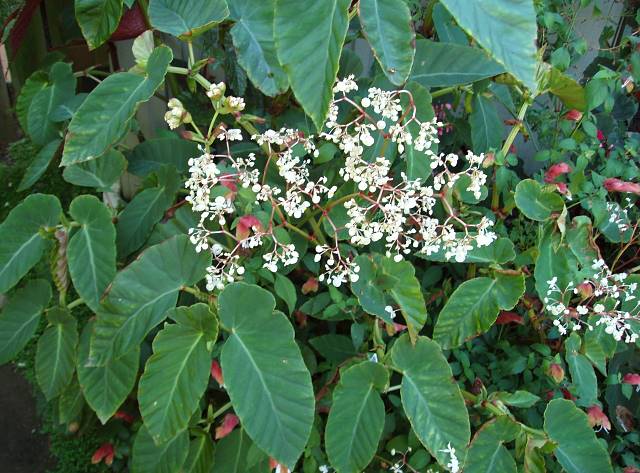
BEGONIA (Pritzelia) angularis; elata, robusta, ramosa, glaborrima, foliis 6-8pollicaribus oblique ovato-lanceolatis subacutis basi bilobis lobo altero maximo rotundato altero rotundato v. truncato marginibus undulati crenulatis basi 4-5-plinerviis dein penninerviis nervis crassinsculis , supra saturate viridibus secus nervos pallidioribus, subtus pallide viridibus roseisve, stipulis pollicaribus ellipticis acutis caducis, bracteis ad basin pedunculorum 1½-pollicaribus e basi cordata lanceolatis herbaceis persistentibus, pedunculis foliis molto longioribus roseis apice pluries dichotomis, bracteolis minutis, floribus ½ -2/3 poll. latis capitellatis albis vel roseis, fl. masc., sepalis 2 orbiculatis medio concavis, petalis triente minoribus oblongis, staminibus toro parvo sessilibus, antheris filamentis longioribus lineari-oblongis connectivo breviter excurrente obtuso, fl. fem., sepalis 4-5 orbiculatis, stigmatibus sessilibus late reniformibus undique papillosis, capsula ½ poll. longa. 3-alata, ala dorsali oblique rotundata, lateralibus multo minoribus, placentis integris undique ovuliferis. Though differing a little from A. de Candolle's excellent description in the smaller size of the petals of the petals of the male flower, and in the somewhat larger capsules, I cannot doubt this being Raddi’s Begonia angularis, which is said (A. DC. I.c.) to have been introduced into English gardens in 1845 from San Gabriel in the Sierra d'Estrella of Brazil. There are specimens of it in the Kew Herbarium from the Organ Mountains, collected by Burchell, and from Rio (probably the Organ Mts.) by Glaziou, Martius gives the province of Rio de Janero and Minas Geraes; A. de Candolle in the Podramus cites Schott as its discoverer in 1822, at San Joao Marques. B. angularis is a magnificent species, of shrubby habit. The plant from which the figure is derived is eight feet high. It is planted in a bed in the Mexican division of the temperate house of the Royal Gardens, where it flowers freely throughout the year. It has been long in cultivation at Kew. Description - Stem, eight feet high, copiously branched, branches spreading or drooping, as thick as the little finger, green. Leaves six to eight inches long, obliquely ovate, lanceolate, unequally two-lobed at the base, very dark green above, paler along the nerve, pale green beneath, and sometimes suffused with red, margins undulate and crenulate; petiole rather short, stout; stipules one to one and a half inches long, ovate-lanceolate, herbaceous, green, persistent. Peduncle. long rather slender. Flowers in heads on the terminal branchlets of a very large repeatedly dichotomously branched panicle, white, about two-thirds of an inch in diameter; male fl., sepals 2, orbicular, depressed in the middle; petals one-third as large, oblong; stamens crowded in a mall receptacle, filaments very short, anthers linear-oblong, connective obtuse; fem. fl., sepals 4-5, orbicular; stigmas sessile, broadly reniform, papillose all over. Capsule three-winged, an inch broad across the wings; dorsal wing obliquely rounded, lateral much shorter. - J. D. II.
- Classification: Species
- Plant Type: Cane-like
- Botanical Section: Pritzelia
- Origin: America, Brazil
- Originator: Raddi
- Date of Origin: 1820
Begonia Community Hub
Share a Growing Update
Loading community updates...