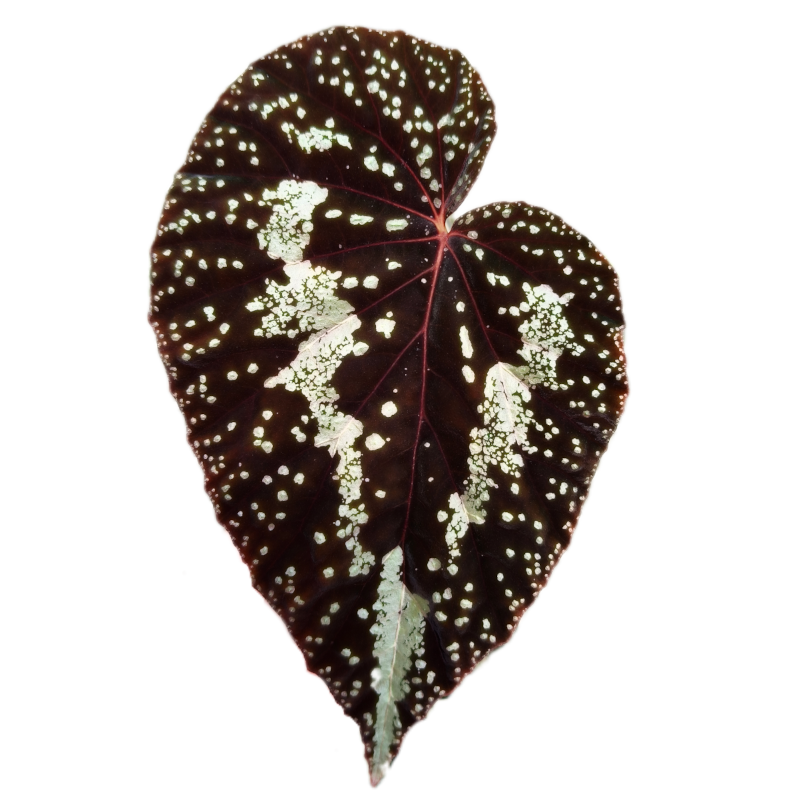

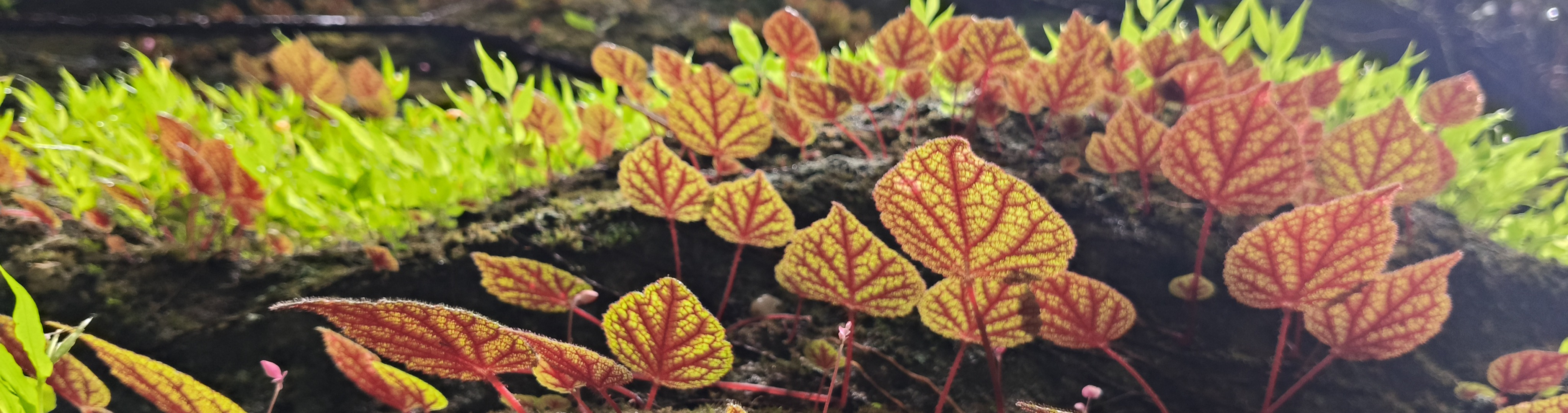
B. mananjebensis
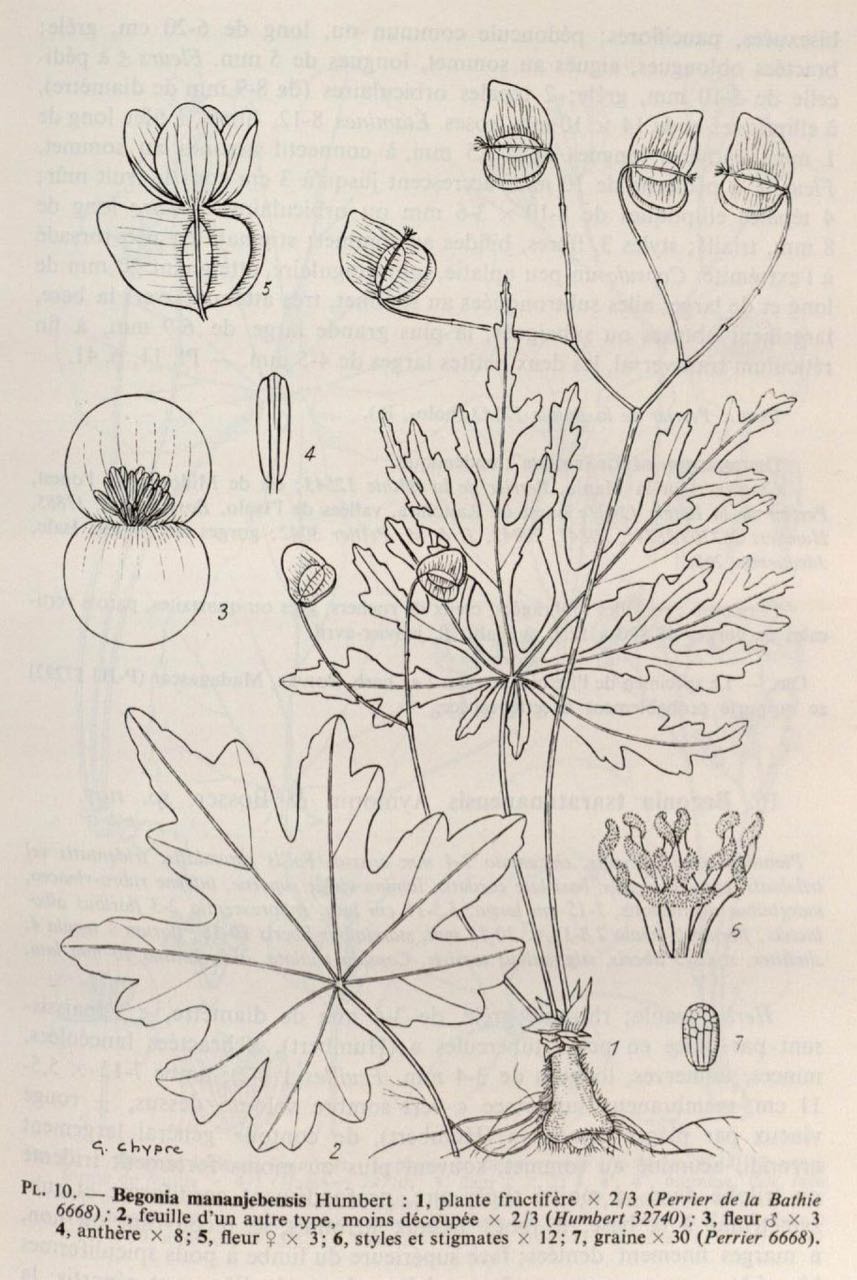
Tuberous herb with a thick rhizomatous tubercle, 5-30 X 6-10 mm. Leaves 2 to 4, petiole thin, glabrous, 10-15 cm long; membranous limb ± deeply palmatillate pinnatifid, 6-10 X 8-9 cm; lobes ± dentes or lobules, sometimes shrunken to petiole and broad barely 4-5 mm; upper side of limb with distant, short, very fine hairs, inferior glabrous; 5-7 main veins at the base, finely projecting below, clearly visible on the upper side. Scaly, triangular parts. Inflorescence a peduncle glabrous, 10-25 cm long in cyme biparous pauciflora; first branching 15-20 mm long, others shorter up to 5 mm long; deciduous bracts; pedicel thick, 4-5 mm long. MALE flowers has 2 suborbicular-oval tepals, 5-8 x 5-7 mm, dark pink to red. Stamens 9-12, fasciculees; obovate antheres, obtuse at the apex and at the base, 1.5-2 mm long; very short nets. Flowers FEMALE has 4 tepals a little uneven, obovate, 5 X 4 mm. Ovary narrowly elliptical, glabrous, 5 mm long, with 3 unequal wings; styles 3, 2.5 mm long, free bifurcated over half of their length; Spiral stigma on each branch of styles. Capsule almost erect or slightly inclined, rather flattened, with a pedicel about 1 cm long, very fine; ribs well marked; 3 unequal wings, with reticulum of very visible transverse nerves, the great angular wing at almost right angle upward, 10-12 mm wide, the smallest 6 mm wide. Seeds medium (0.35-0.25 mm), with a reticle size, obovate. - Pl. 10 p. 39. Species cultivated in the greenhouses of Marnier-Lapostolle Saint-Jean-Cap-Ferrat in the botanical garden "Cedres" (flowers every year).
Pests Diseases
- Classification: Species
- Plant Type: Rhizomatous
- Botanical Section: Quadrilobaria
- Origin: Africa, Madagascar
- Originator: Humbert ex Keraudren-Aymonin & Bosser, Bull. Mus. Hist. Nat. (Paris) III.—M. Keraudren–Aymonin, Fl. Madagascar 144:37, pl. 10. 1983.
- Date of Origin: 1972
Begonia Community Hub
Share a Growing Update
Loading community updates...