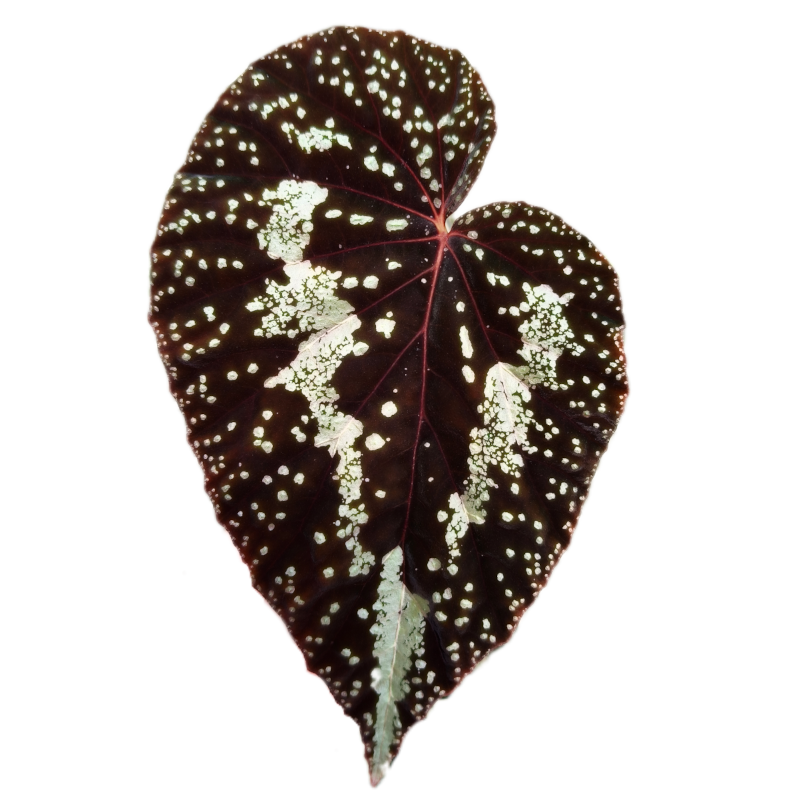

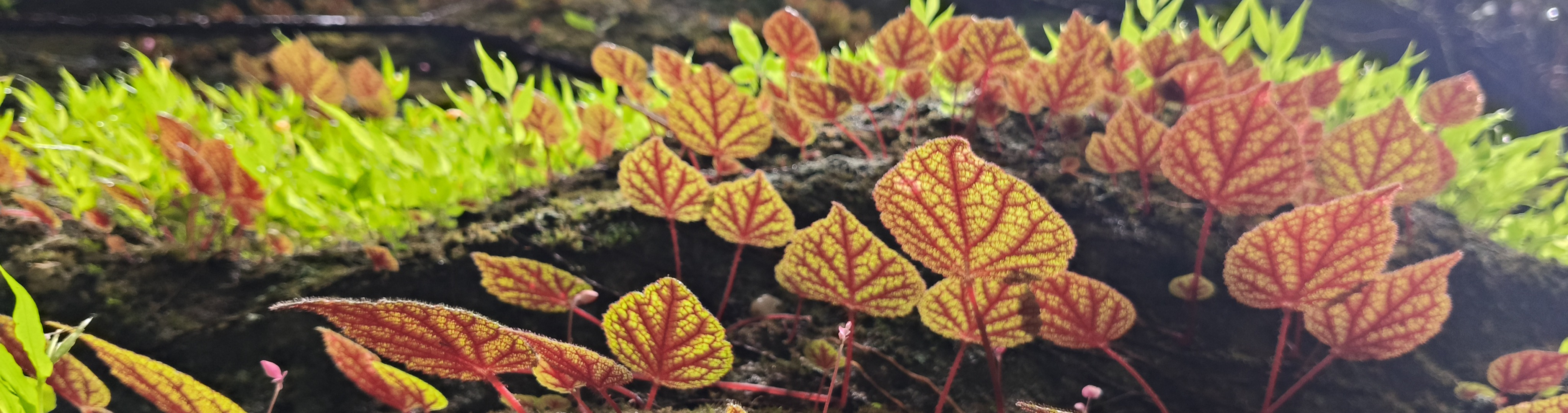
B. lyallii var. lyallii
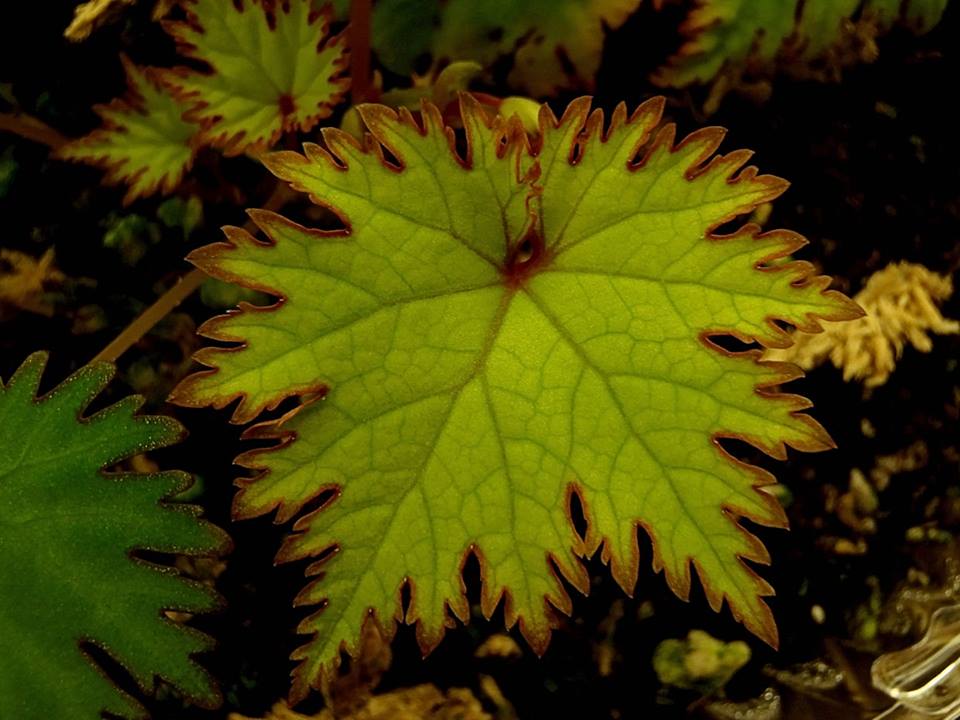
Rhizomatous stem, or -lignous or sometimes woody, short or long creeping, straightened at the end, ramified or not. Tawny brown or brown-green bark; nodes often rooted, internodes very short and sometimes covered by persistent scales (stipules). Leaves most often persistent, with petiole and limbo glabrous or glabrescent or somewhat rough; petiole 3-15 cm long; blade somewhat fleshy, 5 X 4 to 15 x 12 cm usually oval-triangular or oval-elliptical, more or less asymmetrical, cord at base, whole or weakly lobed; margin whole or finely dentee, bright green above, paler below sometimes a little red especially near the veins. Membranous, brown, lanceolate, deciduous or temporarily persistent, about 1 cm long. (sometimes 2). Inflorescence pauci- or pluriflorous, axillary, in bipongous cymes with peduncles 6-20 cm long, often brownish or reddish; membranous bractee, broadly ovate.8 x 8 mm, glabrous, deciduous. MALE flowers with a pedicel 5-12 mm long, with 2 suborbicular or ovate-elongated tepals, white, pink with white borders, often bright rode at the base, 6-9 X 5-10 mm. Stamens 12 to 32 fasciculate, free, with white thread, 0.7-1 mm long; yellow anthers, oblong, approx. 1 mm. Flowers FEMALE pink, with 4 subepal, oval-elongated, 4-7 x 5-8 mm tepals. Fusiform ovary, pale green, 5-10 mm long, with three wings, one larger, triangular, rounded at the apex: styles 3, yellow orfre, generally bifid, rarely trifid, with spiral stigma. Characteristic capsule, 13-15 (-1) mm long, somber green, becoming very white at maturity and desiccation, very strongly tipped-up, its axis being then subparallel to the base of the pedicelled, has often persistent styles; large triangular wing, obtuse at the apex, with a very rounded margin, 15-20 mm long, 12-15 mm wide, with a very visible reticulum and large meshes; small wings 5 mm wide Seeds of 0.35 mm, clearly marked. - Pl. 22 p. 75. Of the specimens listed under the type variety, a number have intermediate characters with other varieties or forms described below: A) with B. lyallii var. urschii, by the form of the leaves (but different color and small flowers): Bosser 20788; Duran Jard. Bot. Tan. 100; Humbert 22855. B) - with B. lyallii f. masoalensis, by the creeping port and the irregularly sloping limbs, almost lobes: Cours 1165, Decary 16553, 16790 (and Jard Bot Tan, 62 var pubescens). It is advisable to mention with the var. Lyallii the specimens Paulion, Jard. Bot. Tan. 64 and 65. They are taken on a cultivated foot, from the Ambohitsitondroina (near Masoala Island), presenting several particular characteristics, but perhaps due to the conditions of the umbria: inflorescences enclosed in two large bracts cupuliforms, leaves up to 13 x 20 cm, stipules 20-30 mm long. In the absence of reference material from the natural environment, it seemed more judicious not to circumscribe a form from the only cultivated exsiccatas. Finally, B. lyallii, as defined, may have affinities with other taxa currently accepted at the specific rank: B. betsimisaraka Humbert (Humblot 2i6 bis). Begonia lyallii A. DC. is a complex of more or less isolated populations distributed in the northeast quarter of Madagascar. It seemed useful to circumscribe at the varietal level the sets which seemed to presit the most originality by the existence of one or more particular characters. However, between the populations which can be related to the type (var lyallii) and the other varieties, there exist terms of passage whose exact chorology is difficult to specify. These terms of passage have been mentioned under the var. lyallii.
Pests Diseases
- Classification: Species
- Plant Type: Shrub-like
- Botanical Section: Nerviplacentaria
- Origin: Africa, Madagascar
- Originator: A. de Candolle, Ann. Sci. nat., Bot. ser. 4.
- Date of Origin: 1859
Begonia Community Hub
Share a Growing Update
Loading community updates...