


B. herbacea var. herbacea
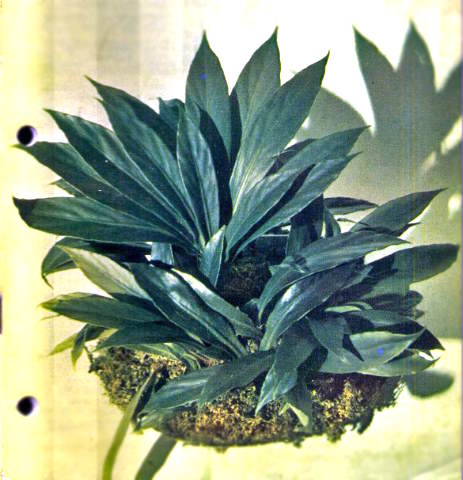
Curtis's botanical magazine. London v. 99 = ser. 3: v. 29 (1873) http://www.biodiversitylibrary.org/item/14374 Begonia herbacea- This singular species of Begonia belongs to a small and very little-known Brazilian section of the genus, of which there are three supposed species, all very imperfectly described. They differ from their congeners in the monoecious inflorescence, on which the male flowers are raised on long scapes, and the females are sessile in the axils of the leaves. The species here figured is a native of Rio de Janeiro, and is published in the ‘Flora Fluminensis," a work equally remarkable for its pretentious character and the badness of its execution. The figure it gives of our plant forms no exception to this, omitting as it does the stipules, bracts, female flowers and all analysis, but being in other respects identical and very characteristic as to habit, I have no hesitation in assuming it to be the plant before me, and hence in adopting Vellozo's name. It is very probable that the other species of the section, B. rhizocarpa, Fischer, and B. attenuata, A. DC., may prove varieties of it, the former differing in the white- spotted leaves with fewer nerves and shorter male peduncles, and the latter in the fewer nerves, 2-flowered short male peduncles, and long petioles. Begonia attenuata has long been cultivated at Kew, where it was received from the Botanical Gardens of Berlin; it has also been sent to me for determination by Mr. Burbidge from the Manchester Botanic Gardens. It flowers freely in the month of March. The rhizome is thick as the little finger, creeping, cylindric, clothed with root fibers and persistent stipules. Leaves tufted at the end of the rhizome, four to six inches long, sessile or petioled, oblanceolate, acuminate, margin serrulate and obscurely lobed, quite glabrous, concolorous, pale green, nerve oblique, seven to eight on each side, base obtuse or acute; petiole naked or winged, the wings undulate. Stipules broadly ovate, pectinate-ciliate. Scape of male flowers rather shorter than the leaves, slender, terete, erect, 4-6-flowered; bracts orbicular, concave, pectinate-ciliate. Male flowers half to three quarter inch in diameter, umbelled, pedicels a quarter of an inch long. Sepals two, orbicular-ovate, obtuse, white. Anthers in a globose stipitate head, cuneate, obtuse. Female flowers sessile in the axils of the leaves. Ovary turbinate from an obtuse base, contracted above into a beak one-third of an inch long, trigonous, angles winged, wing obscurely toothed or lo bed. Sepals three, nearly orbicular, white. Style short, arms three, with reniform broad stigma, the corners of which have twisted appendages. Placentas entire. J. D. H.
B. lanceolata has been mislabeled B. herbacea for a long time, but Dr. Mark Tebbitt has researched the original descriptions of these two species and has found that the names were switched in cultivation. From the original descriptions the plant with the smooth leaf margins should be B. herbacea and the one with the wavy leaf margins should be B. lanceolata. We are changing the names to correspond with the original descriptions. For more details on the mixup, see Dr. Mark Tebbitt’s book, Begonias, Cultivation, Identification, and Natural History, Timber Press, page 148.
- Classification: Species
- Plant Type: Rhizomatous
- Botanical Section: Trachelocarpus
- Origin: America, Brazil
- Originator: Vell. ex Walp
- Date of Origin: 1843
Begonia Community Hub
Share a Growing Update
Loading community updates...