
B. ‘Misuzuhime’
Cultivar created in Japan in 1991 by Hiroko Imamura (18-15 Suzugamine-cho, Nishi-ku, Hiroshima-shi 733, Japan) from crossing B. ‘Mandarin’ x B. ‘Kewensis’, registered on January 9 1996 by ABS under the number R # 955.
The plant first bloomed in 1993 and its distribution began in 1993.
It was described for the first time in an article published in 1994 in the Begonia monthly of the Japan Begonia Society.
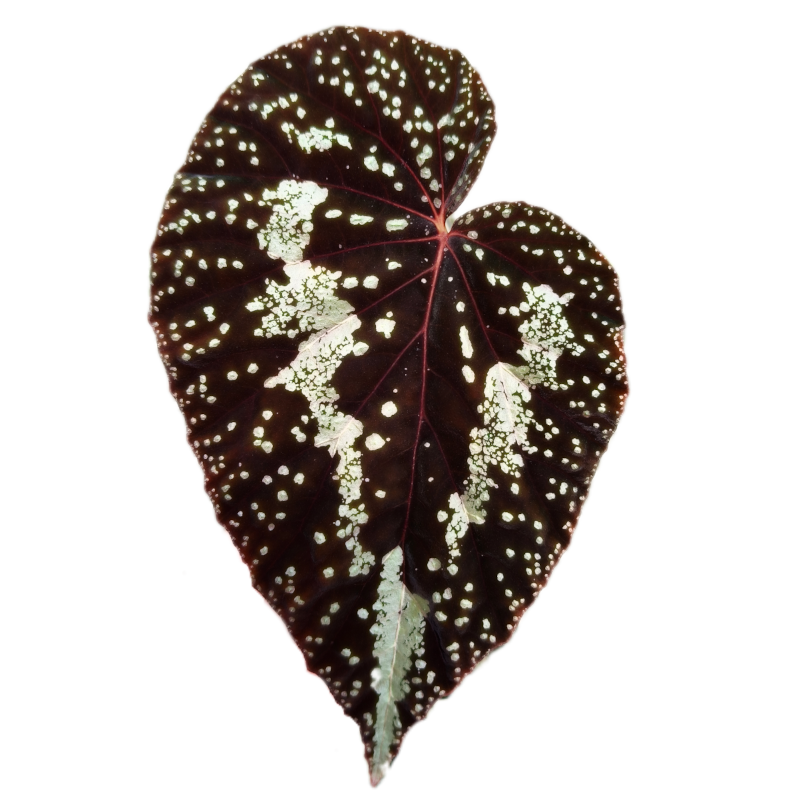
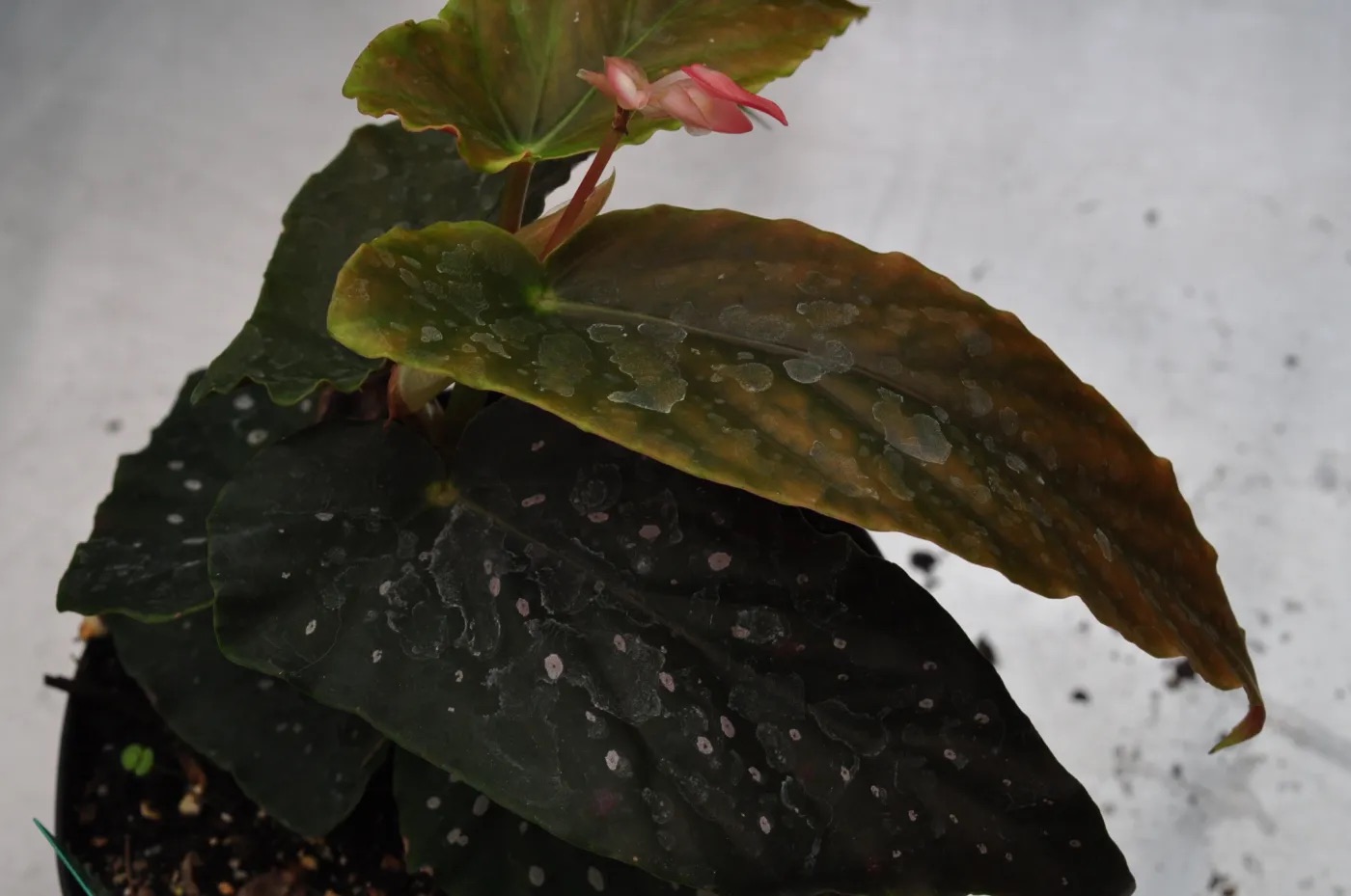
Canelike cultivar 2 4/5′ to 3′ tall with dark-green leaves, dark reddish-brown underneath, and bearing salmon-pink flowers in drooping clusters year around.
Leaves before flowering age are spotted.
Long-ovate leaf blades with acute tip and obliquely cordate base are 1 1/2″ to 2″ wide and 5″ to 7″ long, with entire margins. Petioles are 1/2″ to 3/4″ long Pale-green stipules are 3/5″ x 4/5″.
Profuse flowers, borne in manybranched drooping clusters on 2″ to 2 1/2″ peduncles, include 4-tepaled males and 5 tepaled females, the males with 2 larger (3/5″) and 2 smaller (1/6″-2/5″), the females with 2 larger, 2 smaller, and 1 very small.
Three-winged ovaries and also bracteoles are of a matching salmon-pink, the ovaries a little deeper color.
This cultivar has similarities to B. ‘Lenore Olivier’, but has smaller leaves, not as dark. It is short-noded, branches easily, and sends up basal shoots, growing fast.
- Classification: Cultivar
- Plant Type: Cane-like
- Origin: Asia, Japan
- Originator: Hiroko Imamura
- Date of Origin: 1991
Begonia Community Hub
Share a Growing Update
Loading community updates...