


B. Unbelievable’ series
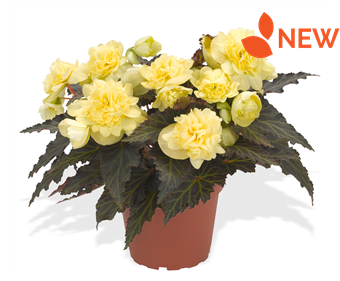
The Unbelievable series of tuberous Begonia has novelty anemone type flowers. Current colors include: Lucky Strike, First Kiss, Miss Montreal and Tweetie Pie.
- Classification: Cultivar
- Plant Type: Tuberhybrida
- Origin: Europe, The Netherlands
- Originator: Dummen (Koppe Young Plants)
NUTRITION pH: 5.5 – 6.0 EC: (2:1 extraction method) .6 – .9 Constant feeding at 75ppm – 100ppm nitrogen with a fertilizer selected for grower’s water quality and soil mix is recommended. Or, feed 200ppm once per week if preferred. TEMPERATURE Rooting out: 68 – 72 F Growing on: 70 – 75 F Holding: 68 – 72 F WATERING Maintain moderate soil moisture. Allow the soil to cycle from moist to moderate levels. Avoid both dry downs and long periods of wet soil, especially in poor weather conditions. Also, avoid excessive soil moisture levels with freshly transplanted plants. To prevent water spotting or burning on sunny days, it is best to water earlier in the morning or later in the afternoon. TIMING 4" – 5": 5 – 6 weeks with one 72 cell plant per container. 6"/1GL Royale™: 6 – 8 weeks with one 72 cell plant per container. 8": 7 – 9 weeks with one 72 cell plant per container. 10" – 12" Hanging Basket: 10 – 12 weeks with 3 – 5 72 cell plants per container. PLANTING Standard 72 liner cell plants should be planted into a well drained soil mix selected to match individual water quality and fertilizer blends. Care should be taken when removing plants from the 72 tray. Begonias can root very firmly into the cell and can “snap off” at the soil line if not dislodged from the cell. When planting baskets or upright containers using multiple 72 cell plants, be certain to plant each plant with its leaf tips/ growing shoot facing outward. This will produce a fuller and more attractive container. Water in thoroughly without saturating the mix and maintain a constant moderate soil moisture level for the first seven to 10 days to establish new rooting. Pinching should not be needed except in the case of taller material at time of planting. LIGHT/LIGHTING Tuberous Begonias require long days of 12 hours or more for proper growth. If exposed to short days (less than 12 hours) tubers can form and plants will go dormant. If crops are planted before April 1st, 14-hour daylength extension or night interruption lighting should be provided in most areas. These plants should be grown in a moderate light area of the greenhouse for optimal flowering and plant development. If desired, continued supplemental lighting throughout the crop will shorten crop time and improve quality, even after the onset of long days. GROWTH REGULATORS If required a spray application of Cycocel® (chlormequat) at 150ppm – 250ppm is effective to control growth. Desired plant habit and quality can also be achieved by controlling soil moisture levels, greenhouse temperatures and humidity levels, and by supplying proper light levels to the plant. Illumination Salmon Pink and Nonstop Yellow are slightly more vigorous than others and are good indicator plants for planning PGR (plant growth regulator) applications. PEST and DISEASE MANAGEMENT There should be little instance of disease if basic cultural guidelines are followed. Over-watering can lead to Botrytis, Powdery Mildew, Stem Rot, or Fungus Gnat issues. Control humidity levels and provide adequate air movement. OUTDOOR GROWING SCHEDULE Tuberous Begonias finish best in a controlled greenhouse environment, but can be moved outdoors after all threat of frost has passed and weather is consistently warm (approximately late May to early June in Michigan). This recommendation is based on average spring weather and should be adjusted for unseasonably severe or unseasonably mild conditions. sun to bright shade
Begonia Community Hub
Share a Growing Update
Loading community updates...