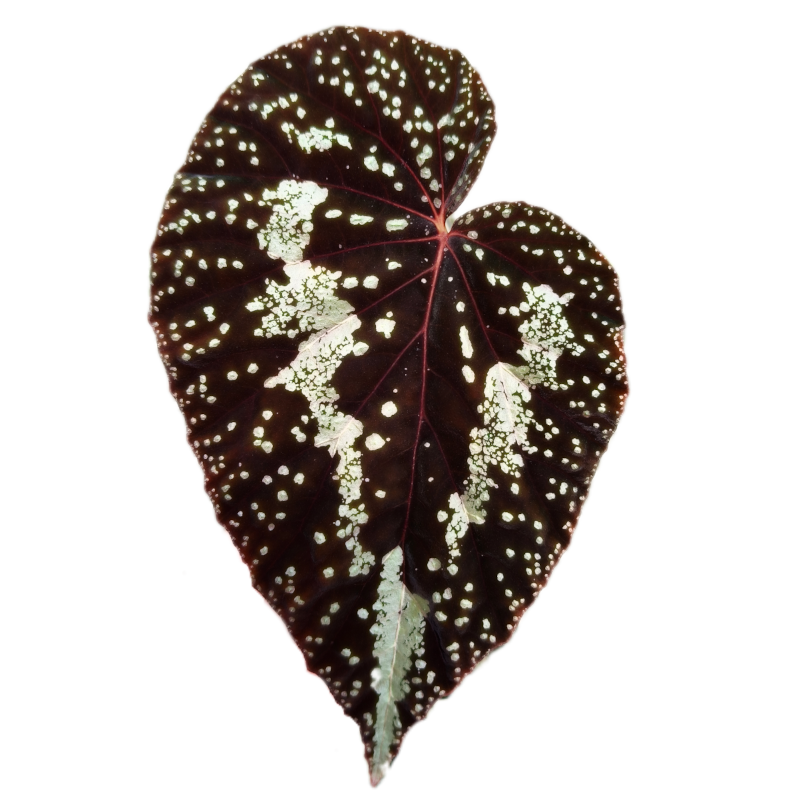

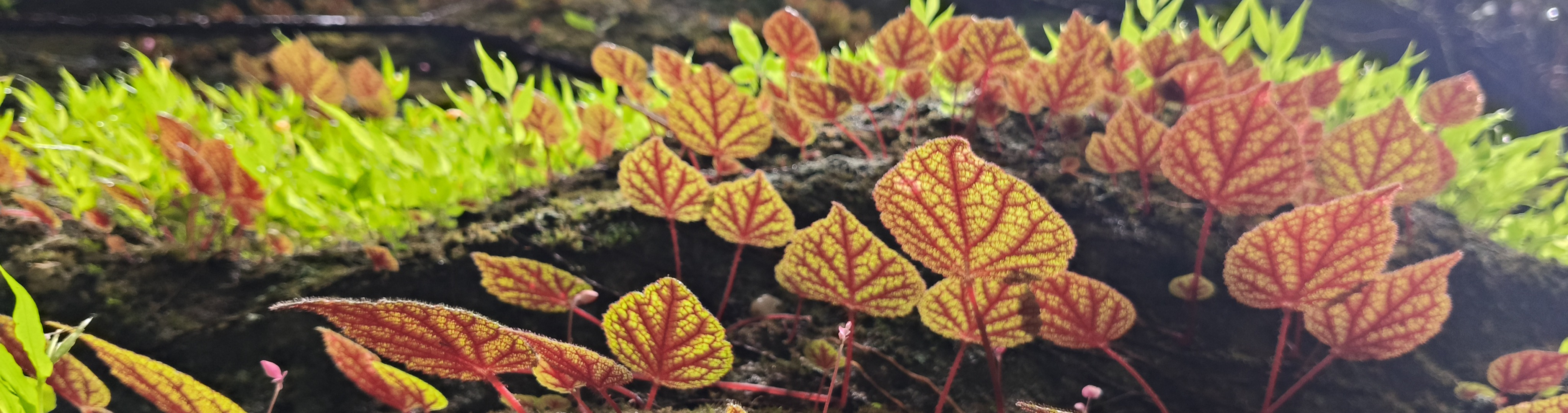
B. didyma
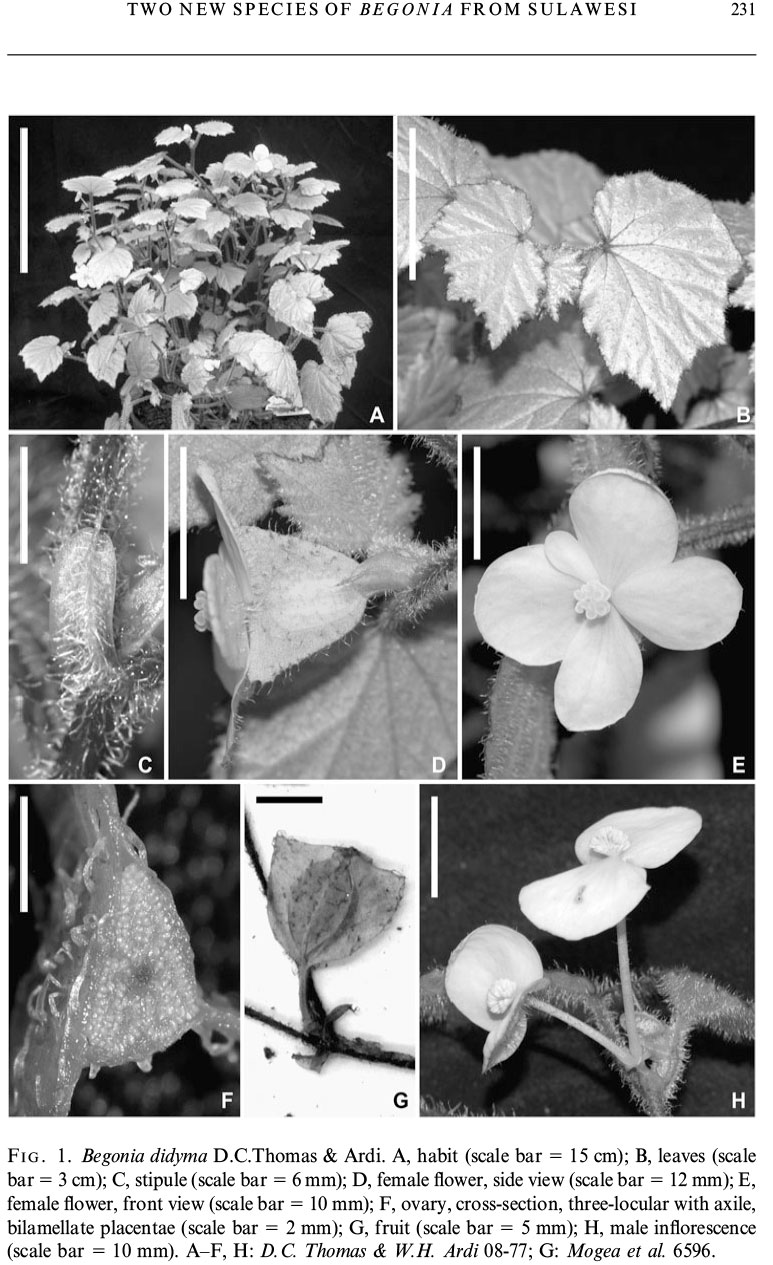
Perennial, monoecious herb with prostrate to erect stems, to c. 35 cm tall, with a moderate to dense indumentum of multicellular, simple trichomes up to c. 2 mm long and a sparse indumentum of microscopic, glandular trichomes on all aboveground vegetative parts. ; The epithet ‘didyma’ (Greek didymos – twin) refers to the two-flowered male inflorescences of this species. Begonia didyma is morphologically similar to Begonia gemella Warb. ex L.B.Sm. & Wassh. Both species exhibit relatively thin stems rooting at the nodes, few-flowered monochasial male inflorescences and solitary female flowers. However, Begonia didyma can easily be distinguished from Begonia gemella by its moderate to dense indumentum of up to c.2 mm long, multicellular trichomes on all above-ground vegetative parts and on the tepals and the ovary of the female flowers (versus only sparsely and microscopically glandular hairy in B. gemella). The male inflorescences of Begonia didyma are strictly 2-flowered monochasial without any rudimentary, unopened flowers (Fig. 1H), while the male inflorescences of Begonia gemella are few-flowered monochasial (2–5-flowered). Warburg (see Koorders, 1904) probably chose the epithet ‘gemella’ (Latin – twin) as reference to the male inflorescences of Begonia gemella, which predominantly show two fully developed flowers, but an examination of recently collected material of this species (K. Armstrong 364 at E), as well as the illustration in Koorders- Schumacher (1922: pl. 94) and a sketch by Irmscher on a herbarium sheet of type material of Begonia gemella (S.H. Koorders 16243b at B), show that the male inflorescences of this species comprise two to five flowers. Moreover, Begonia didyma exhibits very compressed branches bearing the female flowers (up to 2 mm long) and very short pedicels of the female flowers and fruits (up to 4 mm long), while in Begonia gemella these structures, though still short, are distinctly longer than in B. didyma (the branches bearing the female flowers are 5–25 mm long and the pedicels of the female flowers and fruits are 7–18 mm long).
- Classification: Species
- Plant Type: Unknown
- Botanical Section: Petermannia
- Origin: Asia, Indonesia
- Originator: D.C.Thomas & Ardi, Edinburgh J. Bot.
- Date of Origin: 2008
Begonia Community Hub
Share a Growing Update
Loading community updates...