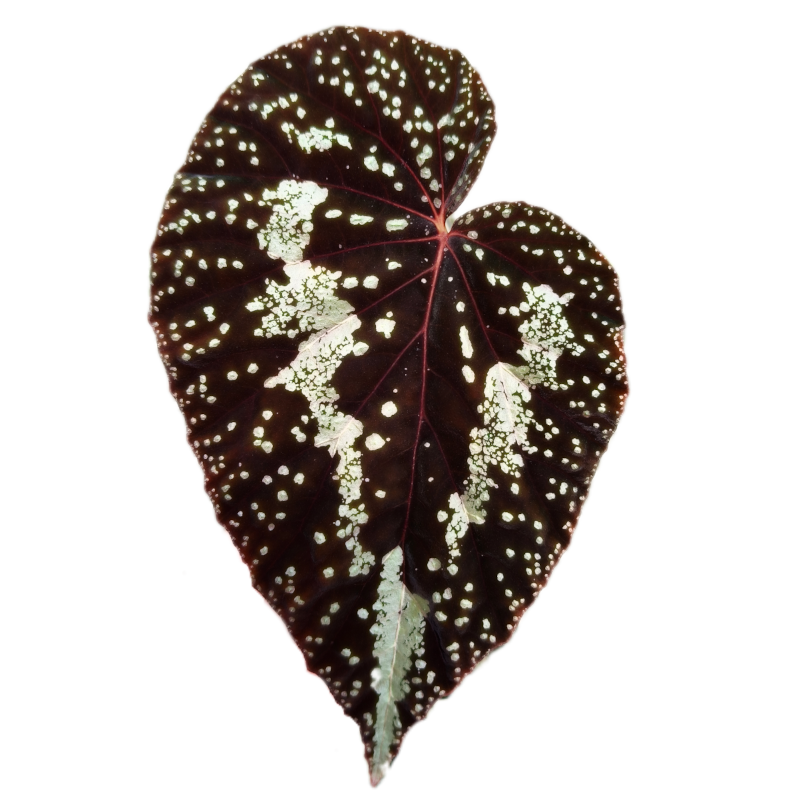

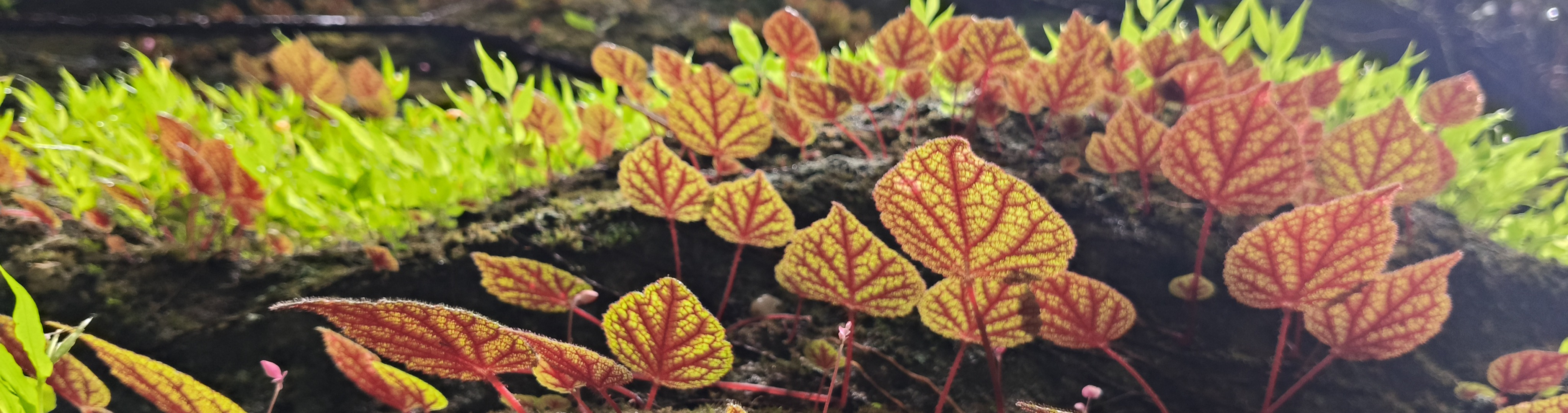
B. bamaensis
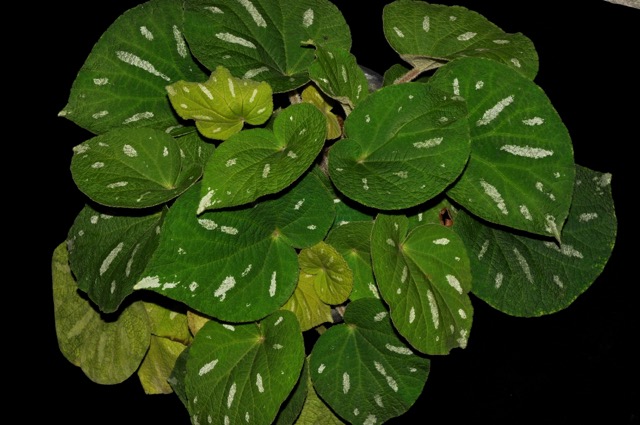
A stemless species; Herbs monoecious; epipetric; perennial; rhizomatous. The specific epithet is derived from the type locality, Bama Yaozu Zizhixian (Bama Yao Autonomous County).; Begonia bamaensis Yan Liu & C.-I Peng is similar to B. cirrosa L.B. Smith & D.C. Wasshausen, differing in the leaves adaxially densely setulose or hispidulous (vs. pilose or pilose-setose) and adorned with white bands or patches between major veins (vs. without white maculation); stipules abaxially glabrous or with few hairs along midrib (vs. pubescent throughout outer surface); peduncle pilose or sparsely so (vs. villous); staminate flower with outer tepals 7-14.5 × 7-13.5 mm (vs. 7-17 × 7-22 mm); ovary whitish or reddish pilose (vs. red hispid-hirsute); capsule 7-12 mm long (vs. 10-20 mm long), abaxial wing of capsule distinctly curved on one side (vs. straight or slightly curved). SEM micrographs of leaves of B. bamaensis (Figures 3-E, G; 4-A, B) revealed prominently elevated stomata complexes, which is unique for the genus Begonia. A comparison of the salient characters of B. bamaensis with three other congeners in sect. Coelocentrum, one of which, B. bonii, from northern Vietnam, is shown in Table 1.
- Classification: Species
- Plant Type: Rhizomatous
- Botanical Section: Coelocentrum
- Origin: Asia, China
- Originator: Yan Liu & C.-I Peng.
- Date of Origin: 2007
Begonia Community Hub
Share a Growing Update
Loading community updates...